Mission Control
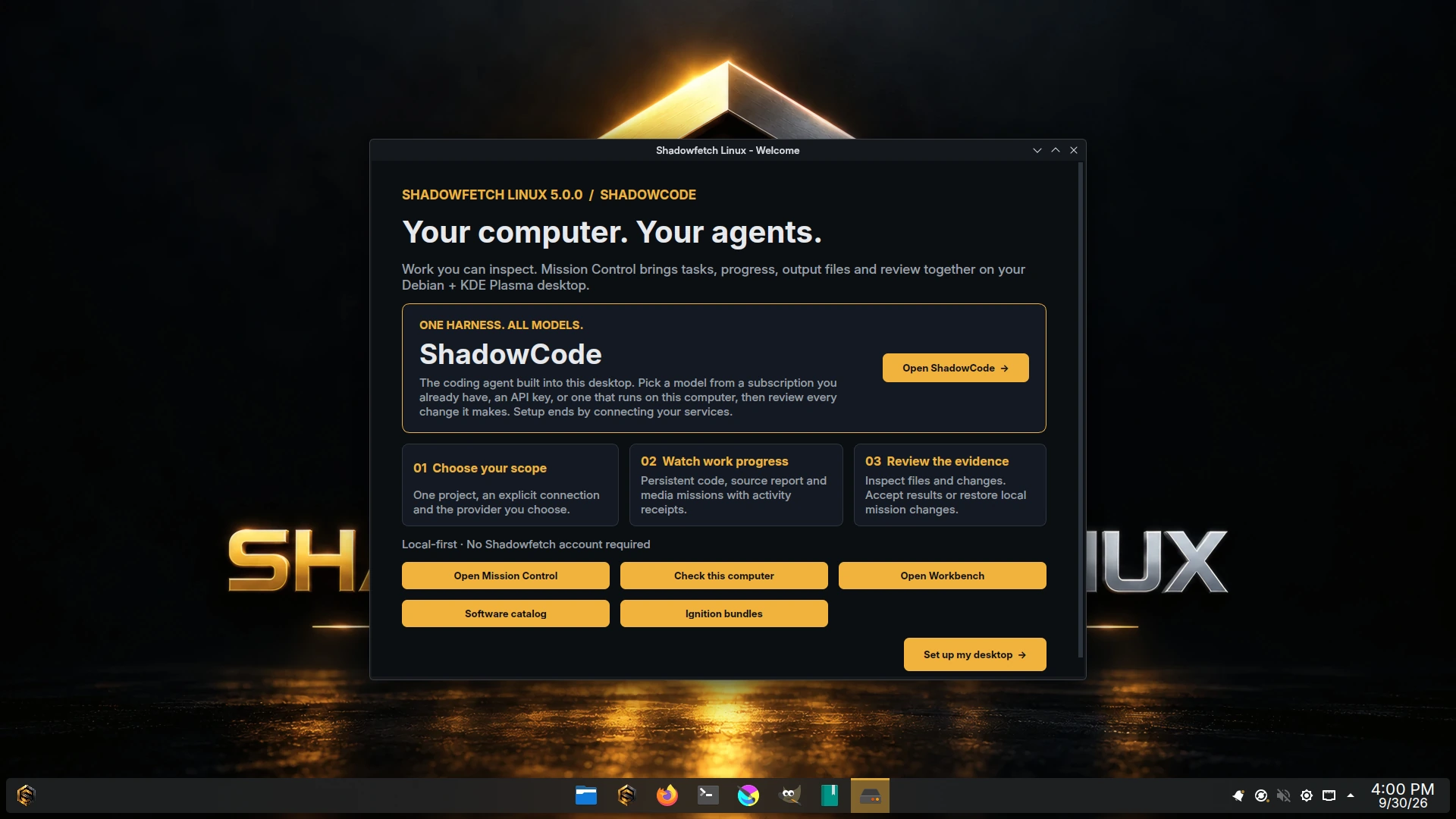
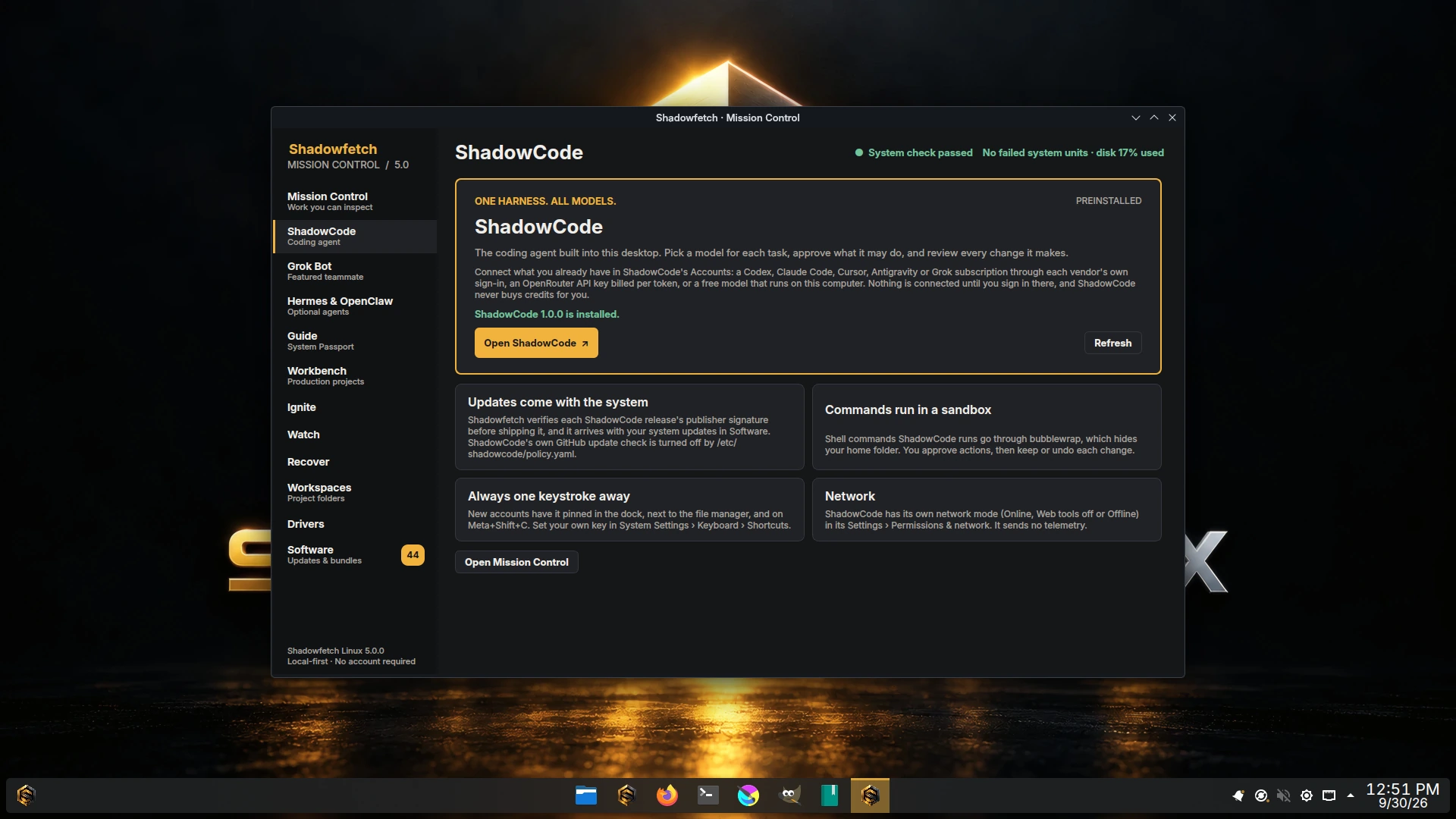
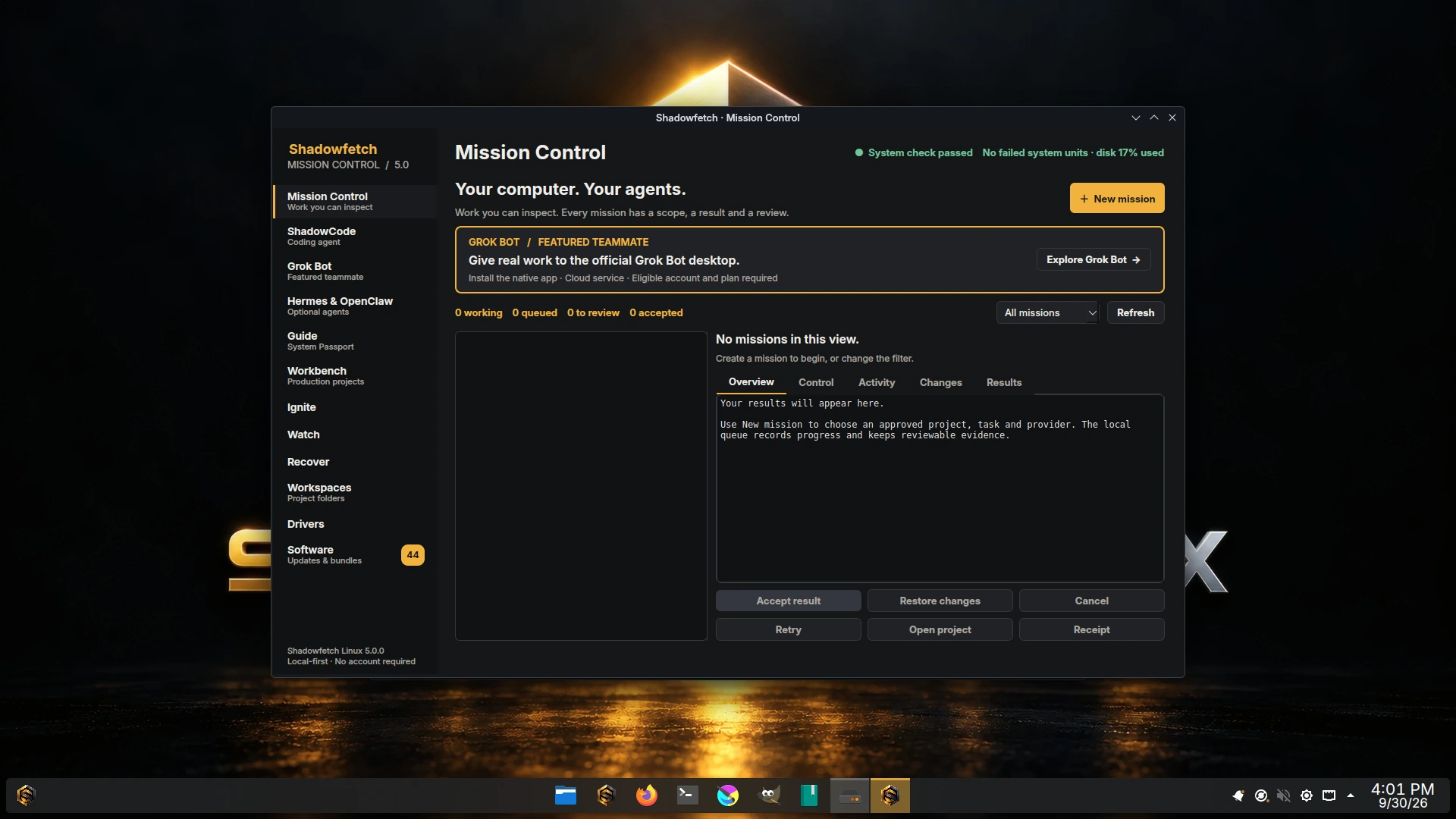
A native desktop for queued tasks, activity, changes, output files and review. Give a mission an existing Workbench project and an explicit connection scope.
OPEN-SOURCE MISSION
Shadowfetch exists so the people who run AI agents own the ground those agents run on. We build in the open — a signed, Debian-derived desktop released under the GPL — because software you cannot read is software you cannot trust, and no one should have to take a black box’s word for what it does with their machine, their files, or their work. Your agents run on your own hardware, in sandboxes you can inspect, with no account to create and no telemetry to phone home, and a snapshot to fall back on when something breaks; what you do stays private to you, while the source, the build, and every release stay open for anyone to audit, fork, and improve. We stand on Debian’s shoulders and state plainly what we add — and we give it all away, because a future where computing remains private, inspectable, and in the hands of the people who use it is one worth building in the open, together.
SHADOWFETCH LINUX 4.1.0 / MISSION CONTROL
Work you can inspect. Give a task an approved project, watch it progress, and review the files, tests and changes before you accept the result.
shadowfetch-4.1.0-amd64.iso · 3.98 GB (3.71 GiB) · amd64 · 2026-09-10
Debian + KDE Plasma 6 · No Shadowfetch account · Signed downloads
FEATURED TEAMMATE / OFFICIAL NATIVE LINUX APP
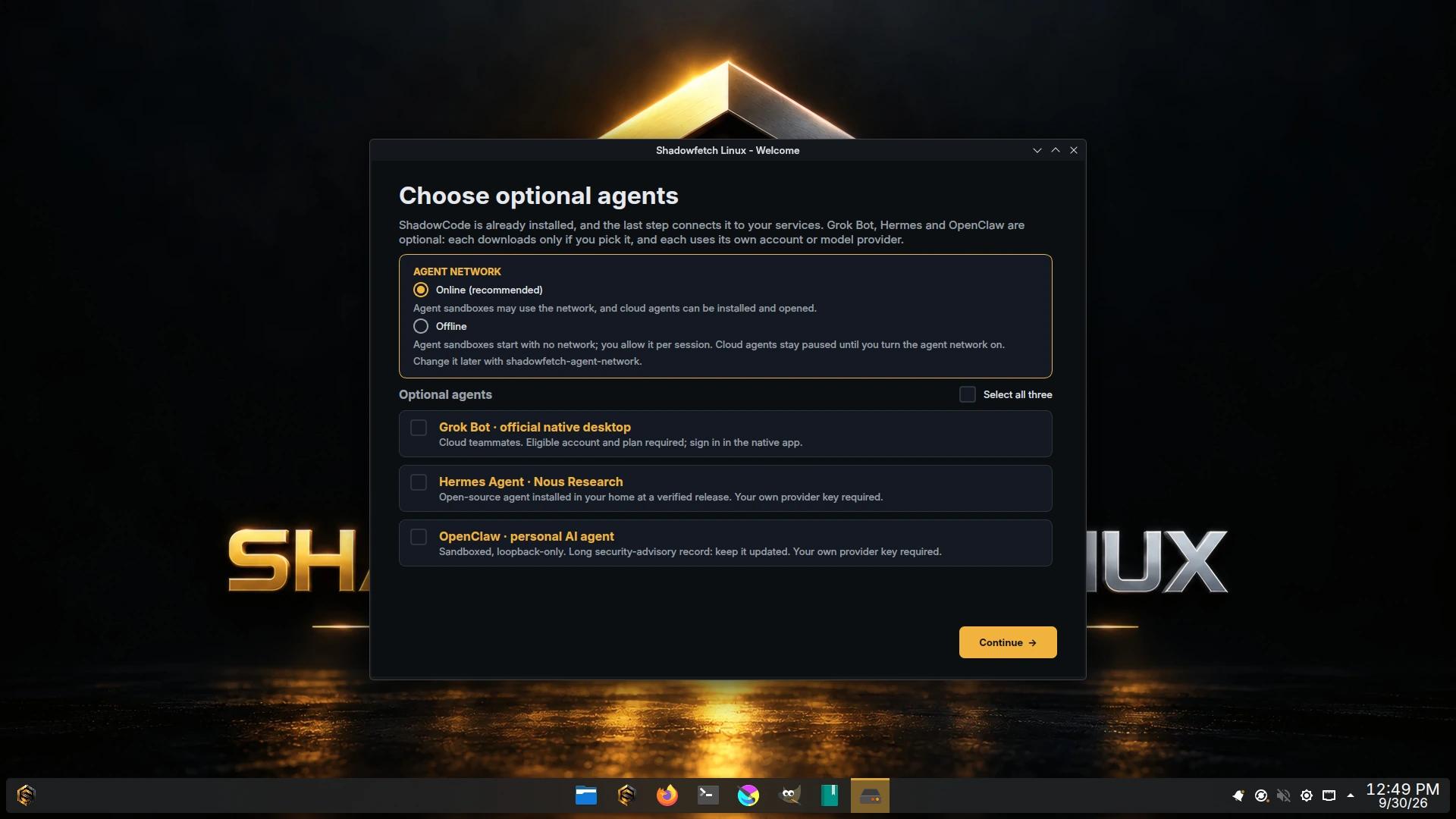
AI teammates you can give real work to. Install the official desktop during first boot, then sign in and manage its cloud tasks in the native app.

A DESKTOP THAT GETS WORK DONE
A native desktop for queued tasks, activity, changes, output files and review. Give a mission an existing Workbench project and an explicit connection scope.
For the first time in Shadowfetch Linux, choose the official Grok Bot desktop at startup. Its verified installer, dedicated page and application-menu entry open the native vendor application. Account access depends on its service and eligibility.
Code with user-selected tests, reports with source citations, and deterministic FFmpeg exports. Each workflow produces files and execution evidence you can inspect.
The local queue survives restarts. A single execution slot, time and process limits, cancellation, bounded retries and recovery checkpoints keep work manageable.
Agent processes receive an approved project and required system files. Every sandbox gets its own network namespace, so host loopback services and abstract sockets are out of reach whether the task is online or not. Where a mission declares destinations, a default-DROP nftables ruleset permits only the addresses those names resolved to; with no destination declared there is no ruleset, and the sandbox reaches anything the machine can reach. Declared masked paths are real mounts, and 46 syscalls answer EPERM in every sandbox.
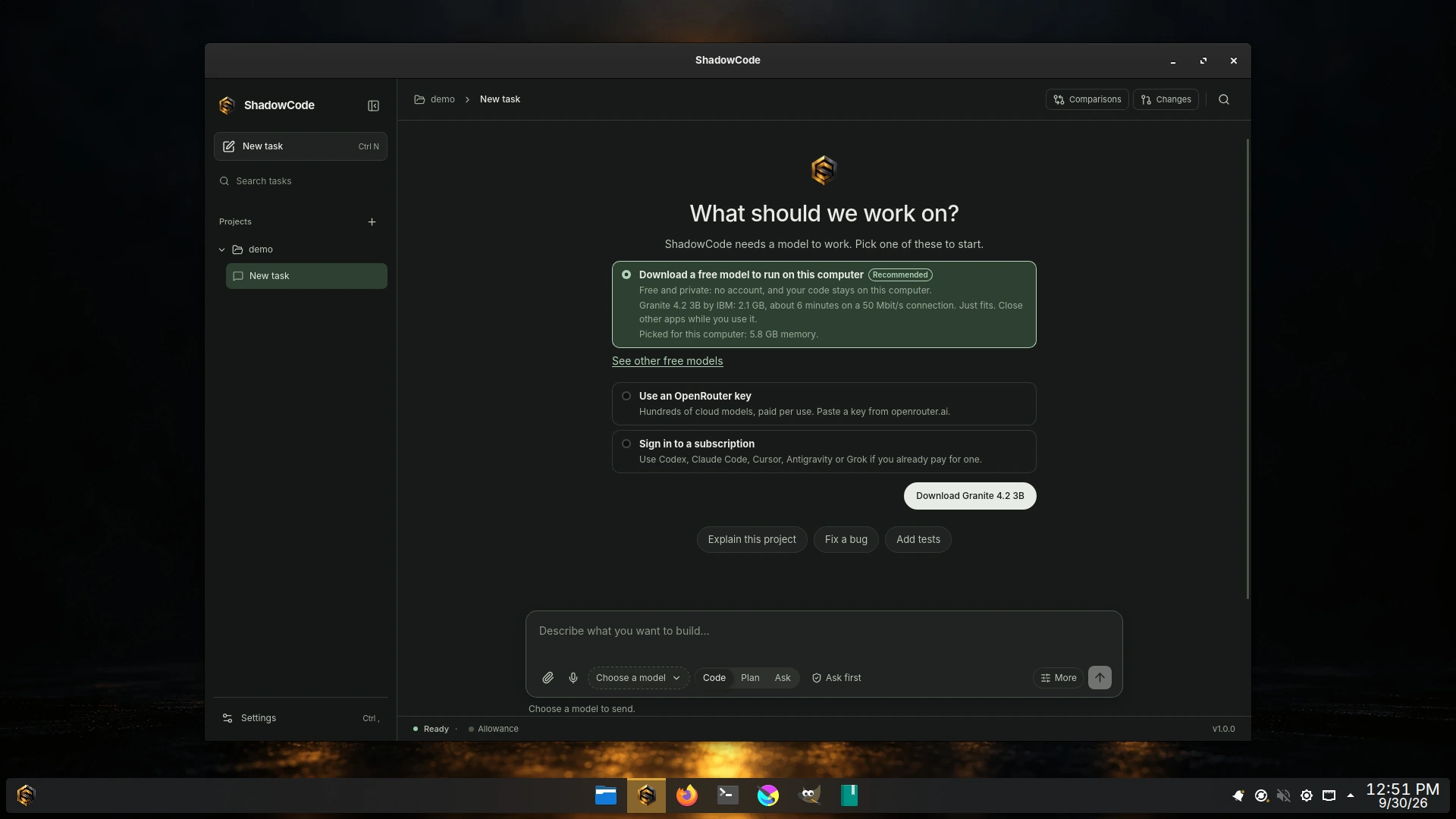
Keep your project, inputs and results together. Use connected coding agents in Fire, or work with local files and deterministic media tools offline in Ice. An on-device provider ships in 4.1 and runs with no network at all; no model weights are bundled, so it reports installed-unavailable until you supply a model service.
THREE STARTING POINTS
7 screenshots · real 4.1 release captures


4.0 REVIEW FILMS
Blender review exports with the approved gentle female narration. These are 4.0 review films. The 3.5 YouTube walkthrough further down the page remains historical.
A RELEASE YOU CAN CHECK
Download facts come from the published release manifest. Verify the checksum and signature, inspect the source, and read the release's own test evidence and limits.
SHA-256 e19e96302f97e94d5284f8fbef181c9b0e49ca7b746afe5e66e4bc6d5c551f25
Release walkthrough
A short introduction to Shadowfetch Linux 4 — Mission Control's inspectable, undoable agent missions, the Fire and Ice editions, and the option to choose Grok Bot at first-boot setup.
Shadowfetch Linux is free and open-source software. Optional vendor applications have their own licenses and accounts. Commercial product apps are separate at shadowfetch.com.
Earlier Shadowfetch releases have been covered by Linuxiac, LinuxLinks and DistroWatch. Their earlier reviews are not claims about this release.